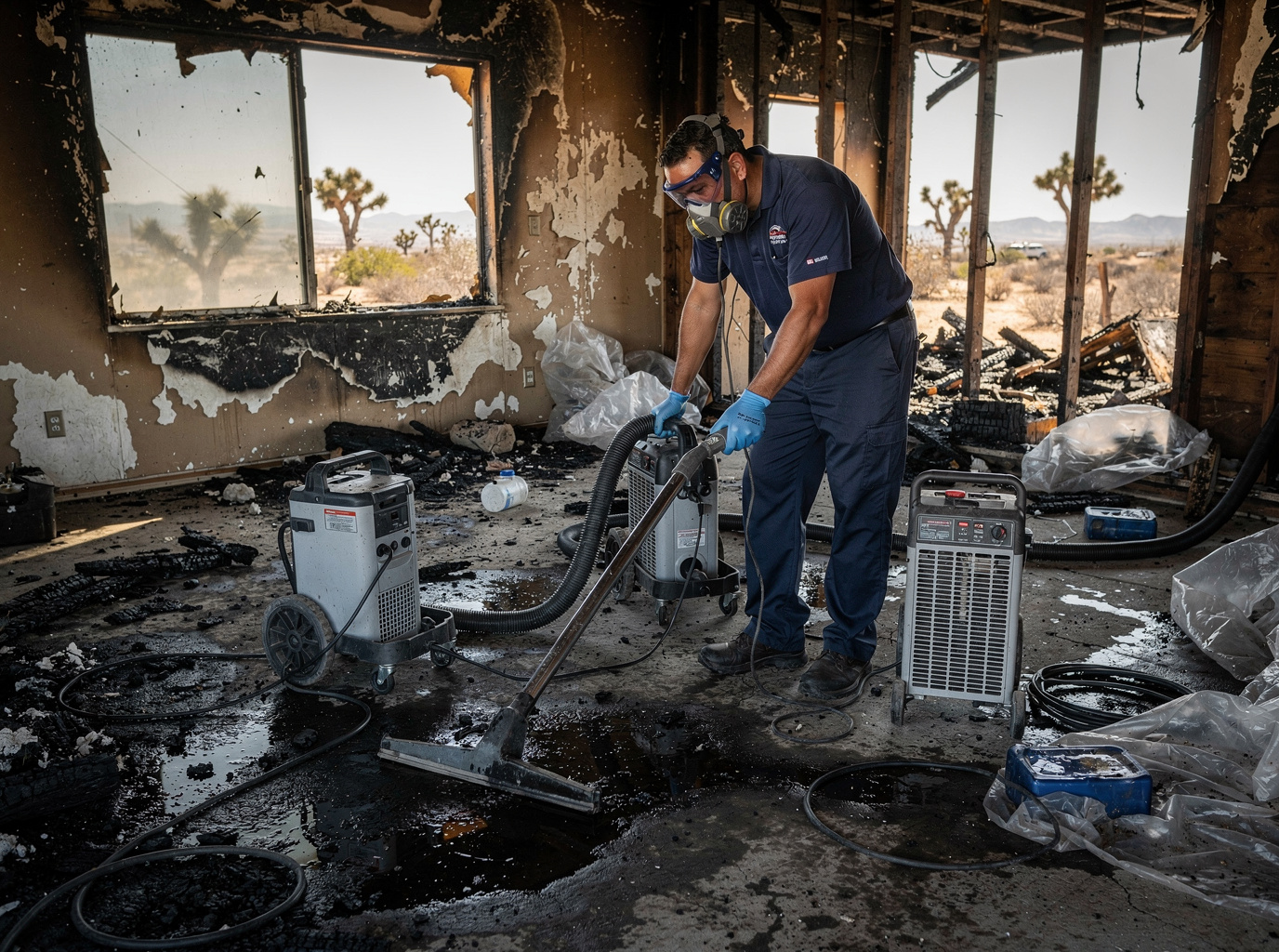
Firefighting efforts in Pinon Hills often leave standing water that soaks into concrete slabs, stucco walls, and older wood framing common in San Bernardino County homes. High desert swings between hot summer days and freezing winter nights accelerate hidden mold growth inside wall cavities once temperatures drop. Remediation crews must pull baseboards, cut drywall at the water line, and use moisture meters to trace migration along the slab edges before any reconstruction begins.
Soot from structure fires bonds to porous materials like drywall paper and carpet padding, releasing acidic residues that corrode metal HVAC components if left untreated. In neighborhoods around the Pinon Hills Community Center, many homes built before 1990 contain fiberglass batt insulation that traps both water and smoke particles, requiring full removal rather than drying attempts. Technicians run negative-air machines with HEPA filtration while extracting water to keep airborne particulates from settling into unaffected rooms.
After extraction, drying protocols shift with seasonal conditions. Summer heat speeds surface drying but leaves moisture deep in subfloors, while winter cold slows evaporation and demands supplemental heat and dehumidification to reach acceptable moisture content levels. Crews document every step with photos and meter readings because insurance carriers in this region frequently request proof that hidden moisture in crawl spaces or attic insulation has been addressed before closing the claim.
Technician insight
In Pinon Hills, the thing that catches most people out with water damage remediation after fire is how quickly suppression water migrates under the slab in winter when cold nights slow evaporation. Homeowners often think once the puddles are gone the job is finished, but the real problem sits in the wall cavities of the older single-story homes common here between Phelan and Wrightwood.
Suppression Water Under Slab in Pinon Hills
A kitchen fire in a 1980s home near the Pinon Hills Community Center led to heavy hose use that soaked the slab and migrated into the adjacent hallway. We found elevated moisture readings three feet up the drywall and under the vinyl flooring. Extraction, wall cuts, and continuous drying over five days brought levels back to normal before any reconstruction started.
Water Damage Remediation After Fire Services We Offer
✓Fire Suppression Water Extraction
Rapid removal of water left by firefighting hoses from slabs, carpets, and wall cavities to prevent secondary structural damage in Pinon Hills homes.
✓Soot and Ash Removal
HEPA vacuuming and chemical cleaning of soot-coated surfaces including drywall, wood, and HVAC ducts before odors set into porous materials.
✓Smoke Odor Elimination
Application of hydroxyl generators and thermal fogging to neutralize smoke residues trapped in insulation and behind cabinets common in high desert construction.
✓Fire-Damaged Drywall and Insulation Replacement
Cutting out water-soaked and soot-contaminated drywall plus removal of saturated fiberglass batts followed by proper disposal and new material installation.
✓Structural Drying After Firefighting
Placement of air movers, dehumidifiers, and moisture monitoring equipment to dry wall cavities and subfloors affected by suppression water in cold winter conditions.
How it works
- 1
Initial Assessment
Technician inspects all affected rooms, measures moisture in walls and floors, and identifies soot migration paths using the address at 593 CA-138 as the starting point for equipment staging.
- 2
Water Extraction
Standing water is pumped and vacuumed from slabs and carpets before hidden pockets in base plates or under vanities are addressed.
- 3
Drying And Monitoring
Equipment runs continuously with daily meter checks until moisture levels match unaffected areas of the home.
- 4
Final Remediation
Soot cleaning, odor treatment, and removal of contaminated insulation complete the job before any reconstruction begins.
Pricing
Cost depends on square footage affected, depth of water migration into walls, and whether winter conditions require extra drying time.