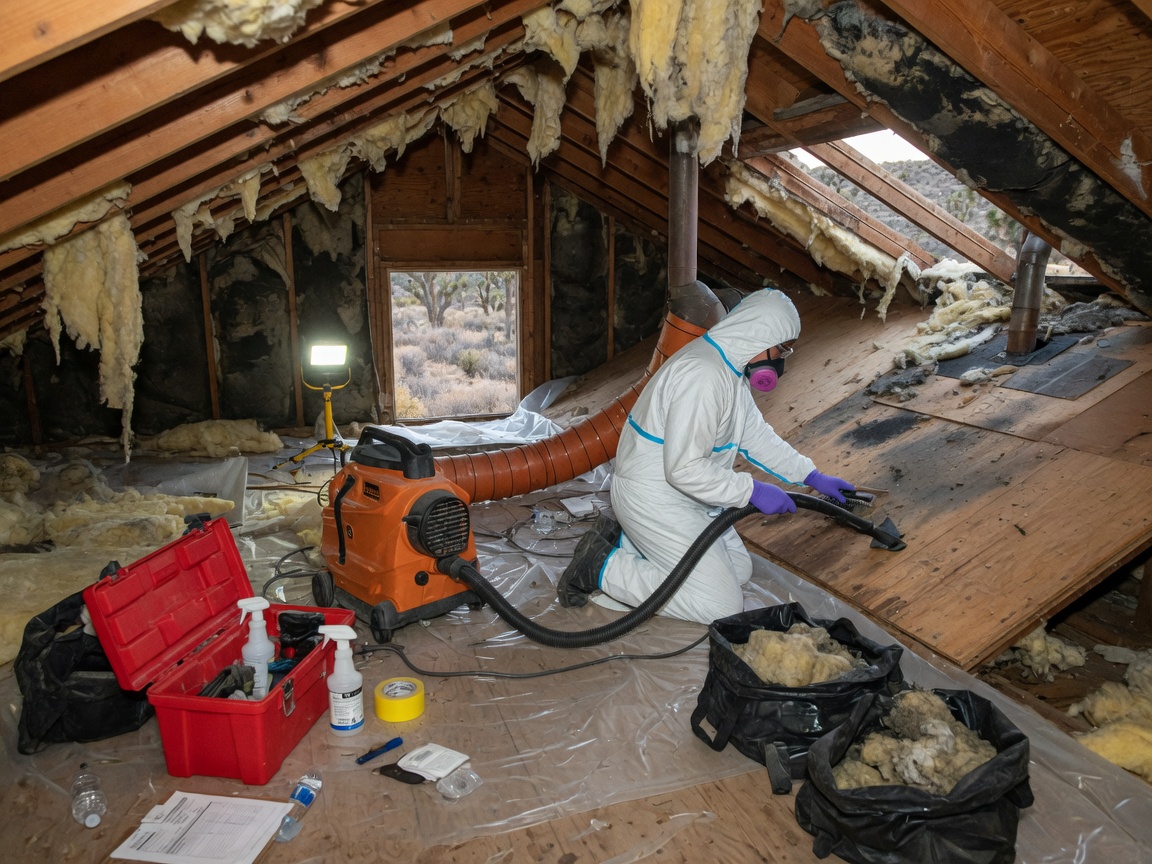
In Pinon Hills and nearby Phelan and Wrightwood, older single-story homes with asphalt-shingle roofs often develop attic mold after winter storms push meltwater under flashing or when summer heat drives moisture through unsealed ridge vents. Attics here typically hold blown-in cellulose or fiberglass over rafters spaced 24 inches on center, so mold spreads along the underside of the roof deck before homeowners notice ceiling stains. Remediation requires full containment with 6-mil poly sheeting sealed at the attic hatch and negative air machines exhausted through a window, plus HEPA vacuuming of every rafter bay rather than simple surface wiping.
High desert nights drop 30 degrees or more, creating repeated condensation cycles on cold roof sheathing even when daytime temperatures hit 90 degrees. This forces technicians to remove and replace insulation in affected zones, treat wood with EPA-registered antimicrobials, and verify moisture content below 12 percent with pin meters before reinstalling new R-38 batts or cellulose. Access is frequently limited by low-pitch roofs and narrow scuttle holes common in 1970s-1990s builds around Pinon Hills Community Center, requiring careful ladder staging on gravel driveways without damaging landscaping.
San Bernardino County building codes require permits for any work disturbing more than 10 percent of the attic area when mold is visible, so crews document pre-existing conditions with dated photos and keep the homeowner informed of inspection timing. Edge cases include rodent droppings mixed with mold in Wrightwood vacation cabins and hidden mold behind ridge-vent baffles in Victorville commuters' homes. Proper disposal of contaminated materials at the county landfill and final clearance air sampling close every job.
Technician insight
In Pinon Hills the thing that catches most people out with attic mold remediation is the 30-degree overnight temperature swings that keep re-condensing moisture on the underside of the roof deck even after the original leak is fixed. Older homes around the Community Center often have ridge vents blocked by blown-in cellulose, so the mold keeps coming back unless you clear the vents and add baffles.
Winter Melt Leak Near CA-138
A homeowner in Pinon Hills noticed brown stains on bedroom ceilings after a cold snap. Inspection found meltwater had entered along the north eaves and wicked into cellulose insulation across six rafter bays. Crew removed wet material, treated the sheathing, improved ridge-vent airflow, and reinstalled insulation before cold weather returned.
Attic Mold Remediation Services We Offer
✓Attic Insulation Removal
Extract contaminated cellulose or fiberglass from rafter bays, bag it on-site, and haul to approved disposal to stop ongoing spore release.
✓Mold Containment Setup
Install sealed 6-mil poly barriers and negative-air machines to isolate the attic from living spaces during remediation in Pinon Hills homes.
✓Roof Deck Antimicrobial Treatment
Apply EPA-registered products to wood sheathing and rafters after drying, then verify moisture levels stay under 12 percent before re-insulation.
✓Ridge Vent and Soffit Cleaning
Clear blocked ridge vents and soffit intakes common in high-desert homes so attic airflow prevents future condensation cycles.
✓Post-Remediation Air Sampling
Collect clearance samples from the attic and living areas to confirm spore counts have returned to outdoor baseline levels.
How it works
- 1
Initial Assessment
Technician climbs into the attic from the access point, maps visible mold, checks moisture in sheathing and insulation, and notes ventilation condition.
- 2
Containment And Equipment Setup
Seal attic hatch and install negative air with HEPA filtration, then stage ladders safely on the gravel driveway typical of Pinon Hills properties.
- 3
Removal And Treatment
Remove wet insulation, vacuum rafters, apply antimicrobial to wood surfaces, and dry the space until moisture readings drop below 12 percent.
- 4
Rebuild And Clearance
Install new insulation, restore airflow through ridge and soffit vents, then run final air sampling before removing containment.
Pricing
Cost depends on square footage of affected attic, insulation type, and whether roof repairs are needed before re-insulation.