2026-10-13 ·
Monsoon Season Flooding Risks for Pinon Hills Homes
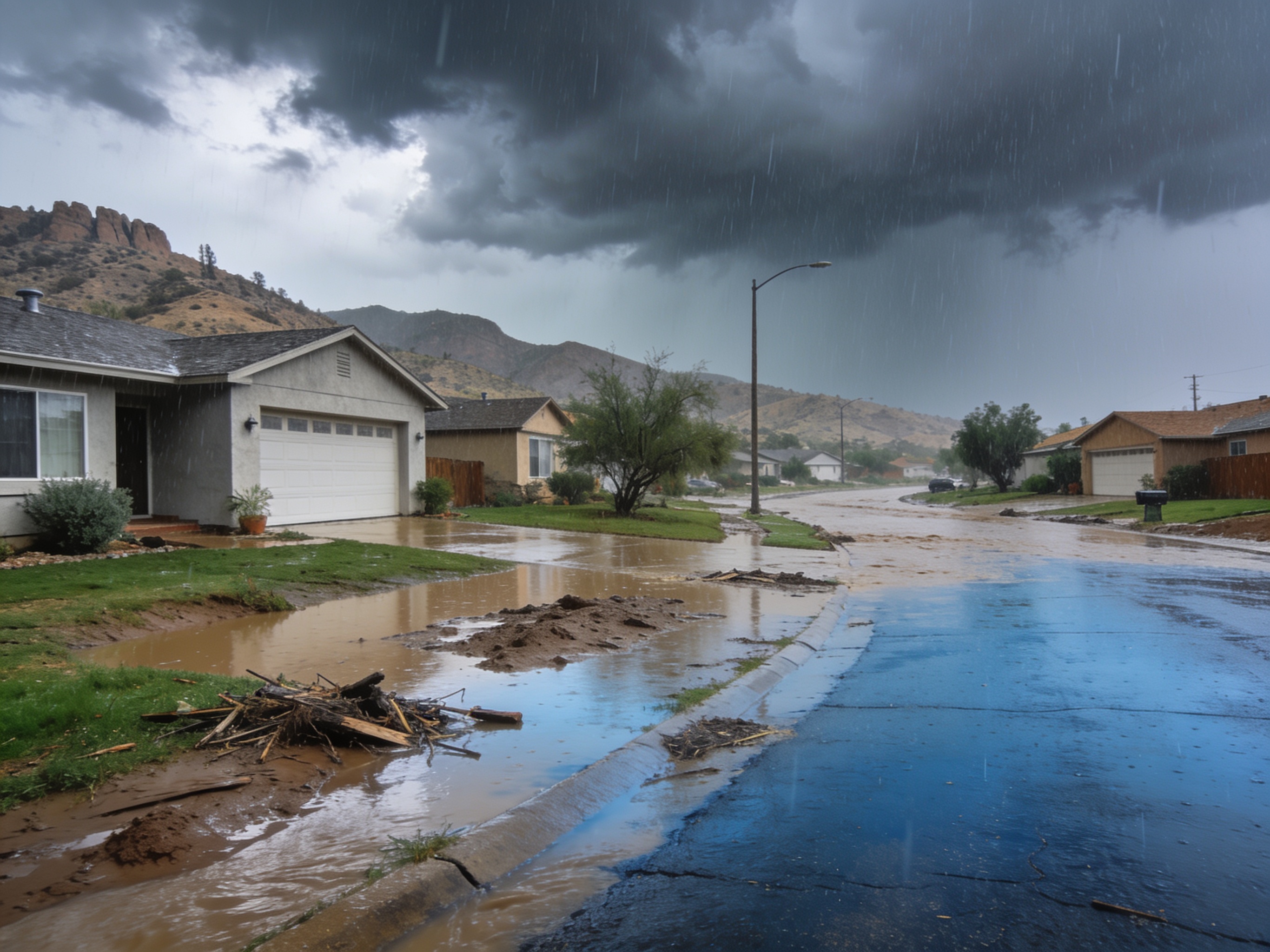
Monsoon season in Pinon Hills brings flash flooding that can affect homes within hours when 1–2 inches of rain falls on compacted high desert soil. The hard ground in San Bernardino County prevents quick absorption, sending water toward foundations, crawl spaces, and low-lying driveways in neighborhoods around Pinon Hills and nearby Phelan.
How Monsoon Patterns Hit the High Desert
Summer monsoons typically arrive from July through September with short but intense bursts that drop 0.5–1.5 inches in under an hour. In Pinon Hills the terrain slopes toward washes and roads, channeling water past homes built on older lots with minimal grading. Cold winter nights that follow can freeze residual moisture in crawl spaces, expanding cracks in concrete slabs common in homes from the 1970s and 1980s. These cycles repeat yearly, wearing down exterior grading and pushing water under doors or through window wells. Residents near the Pinon Hills Community Center often report water crossing CA-138 after heavy cells because roadside ditches fill faster than they drain into the sandy but compacted soil.
Specific Risks to Pinon Hills Housing Stock
Many homes in Pinon Hills sit on raised lots with dirt or gravel yards that erode during repeated storms. Water pools against stem walls and seeps into older stucco exteriors where sealant has dried out from summer heat. Crawl spaces under single-story ranch homes collect silt that holds moisture for weeks, feeding mold once temperatures drop below 50 degrees in winter. Driveways and patios crack along the edges where runoff from surrounding hills carries rocks and debris. Properties closer to Wrightwood and Victorville face similar issues because the same high desert soil and elevation create comparable drainage patterns. These conditions turn a one-hour rain into days of standing water that requires extraction equipment to remove before structural damage sets in.
Protecting Foundations from Erosion
Check and re-grade soil around the perimeter every spring so water flows away from the house at a 5 percent slope for at least 6 feet. Install or clean French drains along the uphill side of lots that back up to open desert. Seal exterior cracks with flexible caulk rated for temperature swings between 100-degree summer days and freezing winter nights. Homeowners in Phelan and Llano report fewer issues after adding downspout extensions that carry roof water 10 feet from the foundation. Protecting Foundations from Erosion After Heavy Desert Rains explains additional steps that match the local soil and weather cycle.
Immediate Steps When Water Enters the Home
Shut off power to affected rooms and move valuables to higher ground before water reaches outlets. Document the water line on walls with photos and mark the date. Remove standing water with a wet vac or pump within the first 24 hours to limit mold growth on drywall and carpet padding. Open windows and run fans once electricity is safe. For larger volumes that reach multiple rooms, contact a local team equipped for flood restoration services that can extract water and begin drying with commercial equipment sized for high desert humidity swings.
When Professional Extraction Becomes Necessary
If water reaches carpet, drywall, or insulation, or if it sits longer than 48 hours, DIY methods rarely remove enough moisture to prevent hidden mold. Technicians use moisture meters to check behind baseboards and under subfloors, then apply drying plans that account for the low humidity and high winds common after monsoons. Homes in Victorville and Wrightwood often need the same approach because the shared climate produces identical drying times. Call 24/7 at 593 CA-138, Piñon Hills, CA 92372 when water crosses thresholds so extraction starts before secondary damage raises repair costs.